هلیوس ۴۴-۲ | Helios-44-2
An old lens that makes light swirl
A few years ago, on a freezing winter day, I walked into a very special shop in Prague. It sells nothing but retro cameras and gear.
I was after a lens I'd first spotted online and fallen for because of its crazy bokeh: the Helios-44-2. Finding out that such a special lens was right here in Prague made my day.
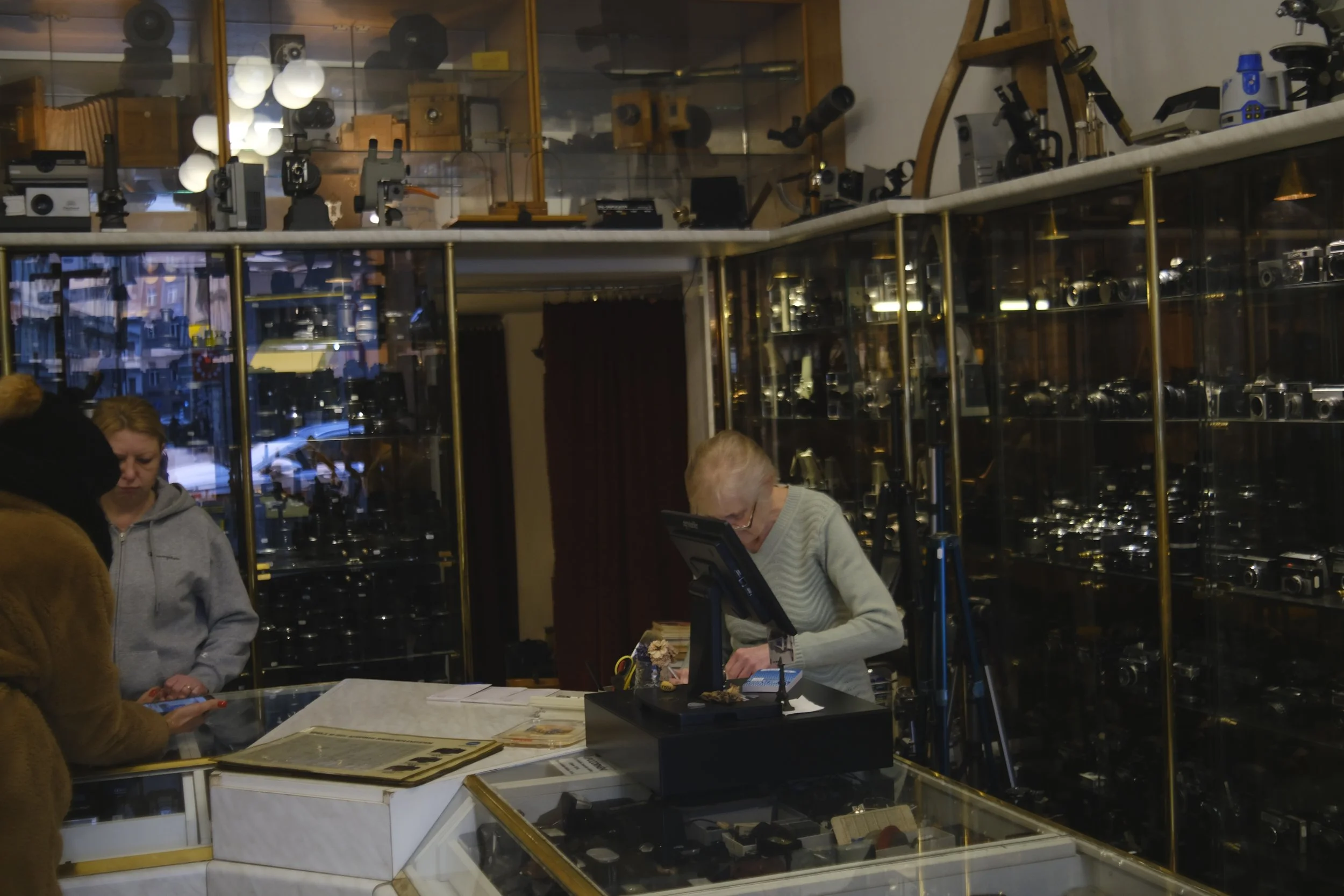
This is the camera store I went to.
I just made sure it wasn't the Japanese copy, the one with the smoother focus ring. I wanted the real Soviet original.
The Helios-44-2 is a 58mm f/2 lens made in the USSR for Zenit cameras. Half a century on, it's still one of the most loved vintage lenses out there.
The magic isn't sharpness, it's character. The blurred background doesn't just sit there quietly; it spins around your subject like a whirlpool of light.
From the German Biotar to the Soviet Helios
Let's be honest: the Helios-44 is basically a Soviet copy of the Carl Zeiss Biotar 58mm f/2. The Biotar started life as a cinema lens, and Zeiss Jena kept making the 58mm version for Contax and Praktica SLRs until around 1960 (davidde.com).
After World War II the Biotar formula ended up at KMZ in Krasnogorsk, the same factory that built Zenit cameras. Fun fact: early copies still carried the Biotar name, as "BTK", the Krasnogorsk Biotar (Phillip Reeve).
The secret behind the swirl
The swirly bokeh is actually an optical flaw that became this lens's signature. Every lens built on the Biotar formula has that spinning background (Wikipedia).
The main culprit is mechanical vignetting. Near the edges of the frame, the bokeh discs get clipped into cat's-eye shapes. Those ovals line up around the centre and create the sense of rotation (OpticalLimits).
Want maximum swirl?
Shoot at or near f/2; from f/5.6 on, the effect fades.
Keep your subject close and the background a bit further back.
Find a background full of point lights or leaves; the bubbles need strong contrast.
Put your subject near the centre so the whirlpool spins around them.
Long story short: city lights at night are this lens's playground.
A frozen night on Wenceslas Square
I put the lens on my Fujifilm digital camera with an M42-to-FX adapter and headed out with Omid. It was below zero, and that was the first challenge.
The focus ring on this model gets really stiff, especially in sub-zero cold. Add frozen fingers to that, and I couldn't even feel the focus ring under my hand.
So we grabbed a few quick shots and headed home. But once I saw the photos, I knew it was worth it. I've never owned another lens that creates bokeh like this.
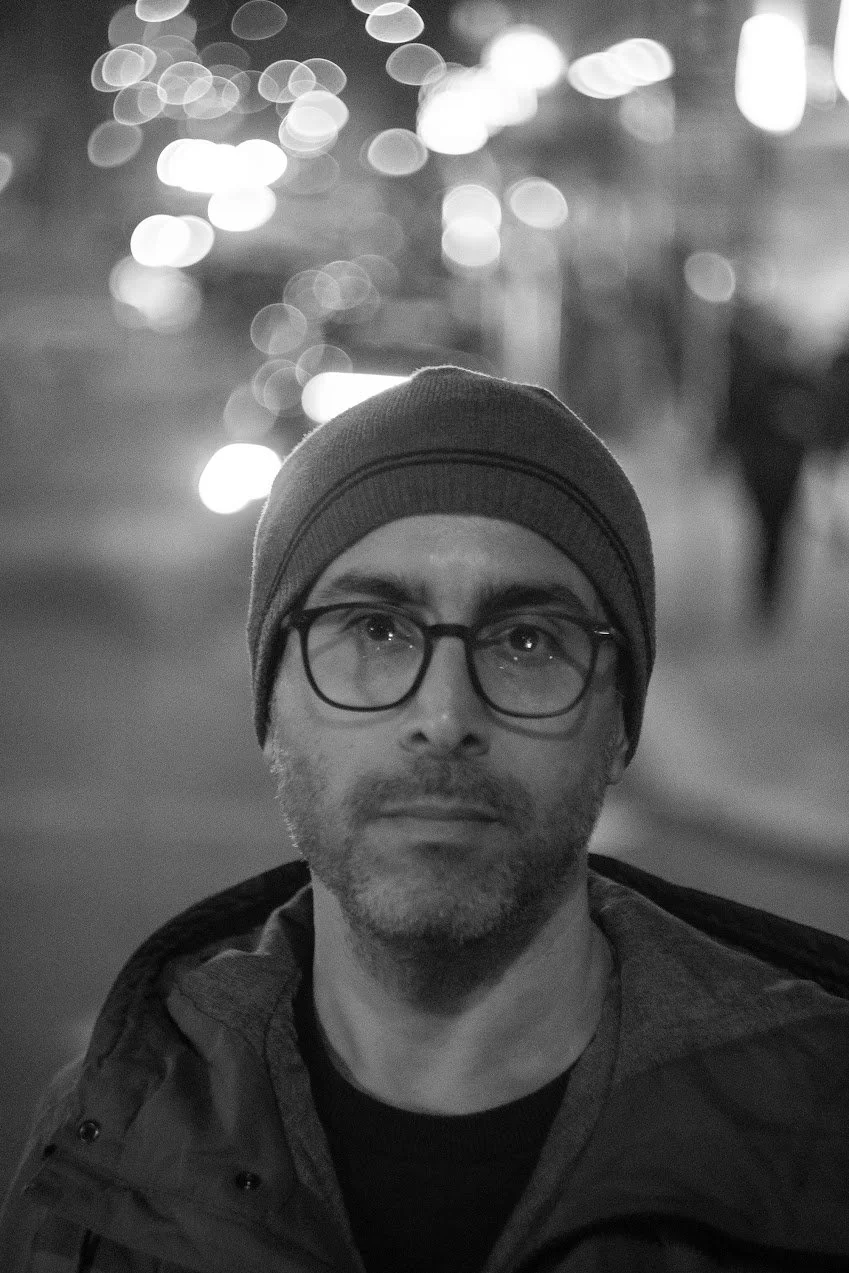
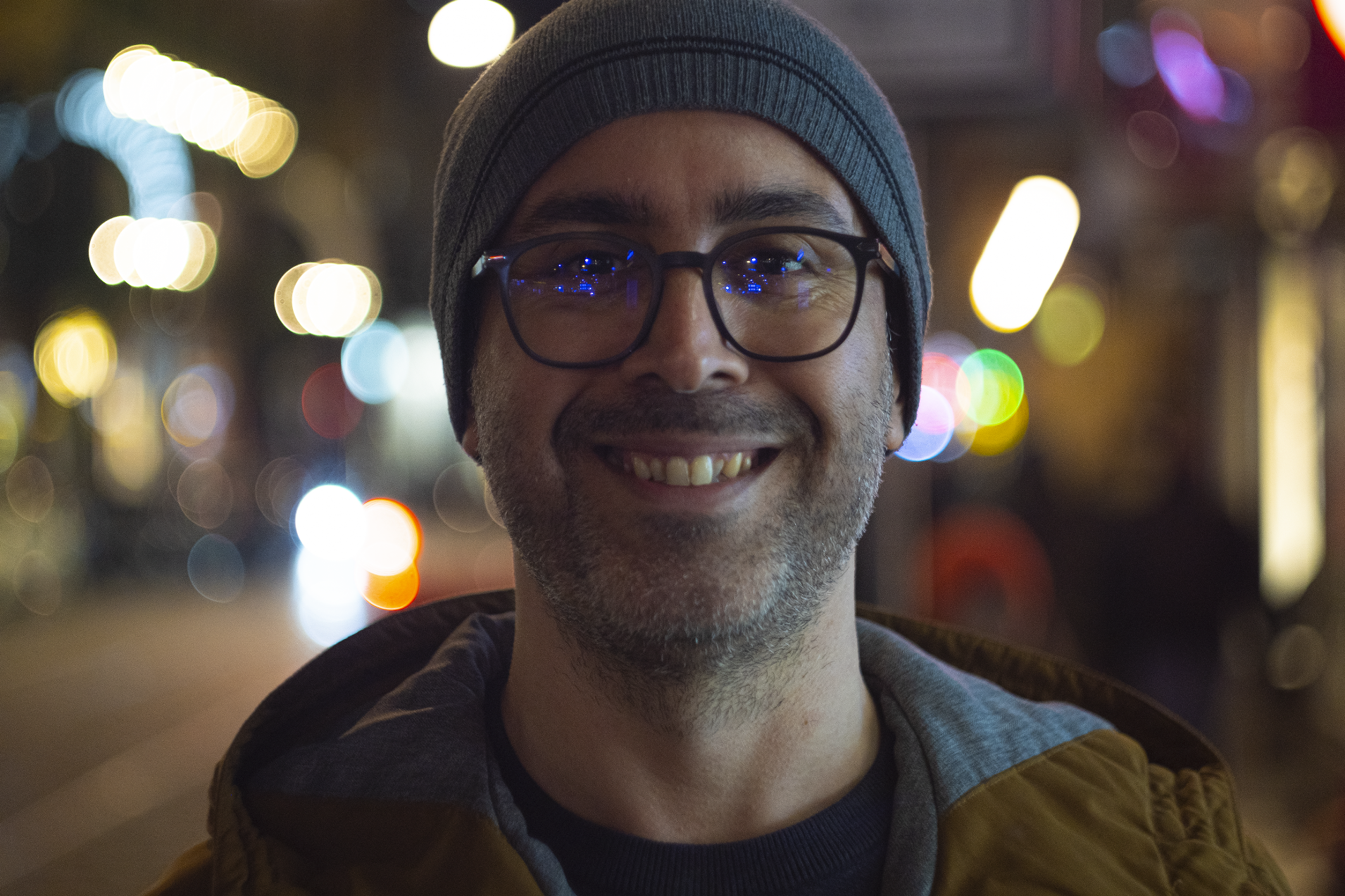
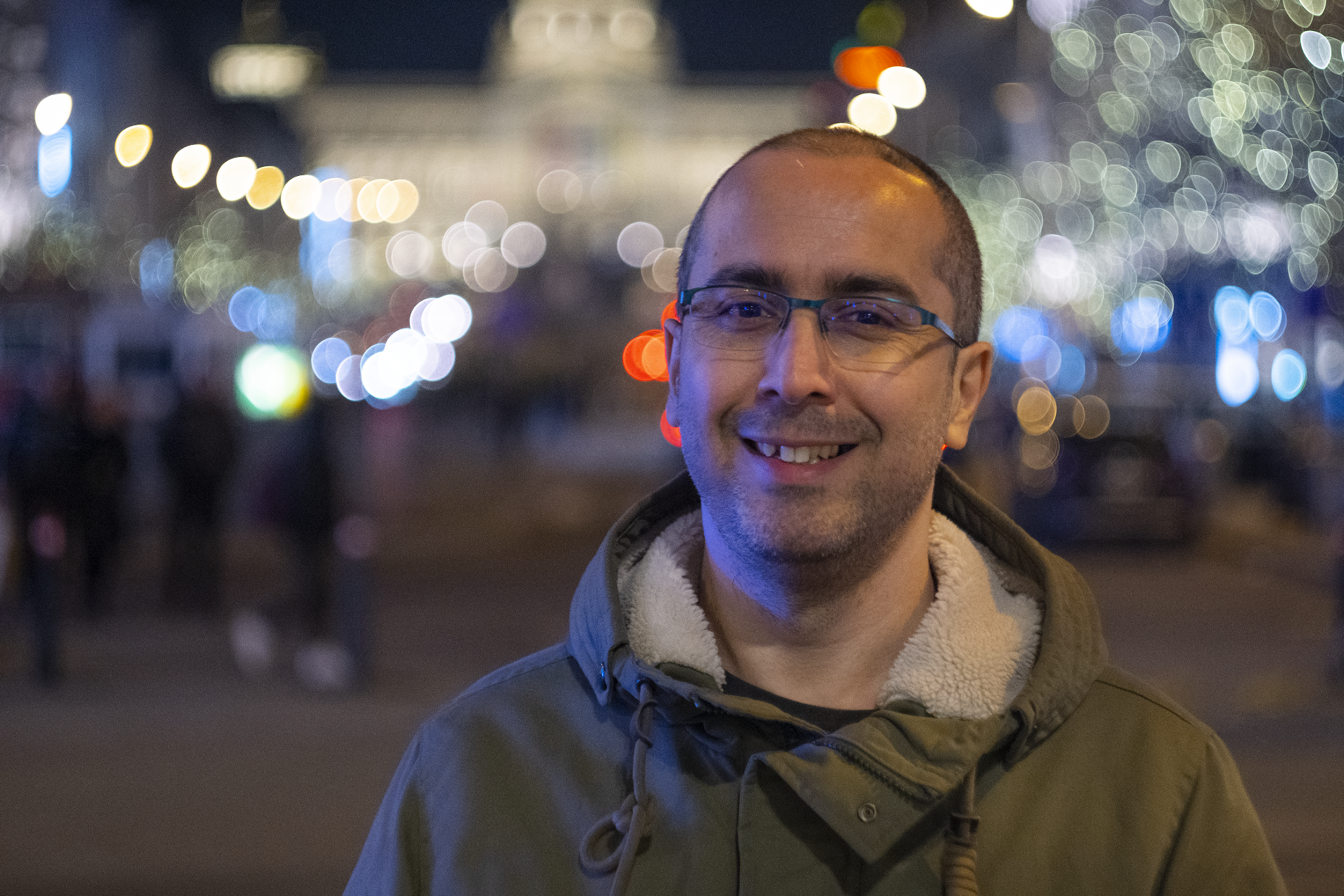
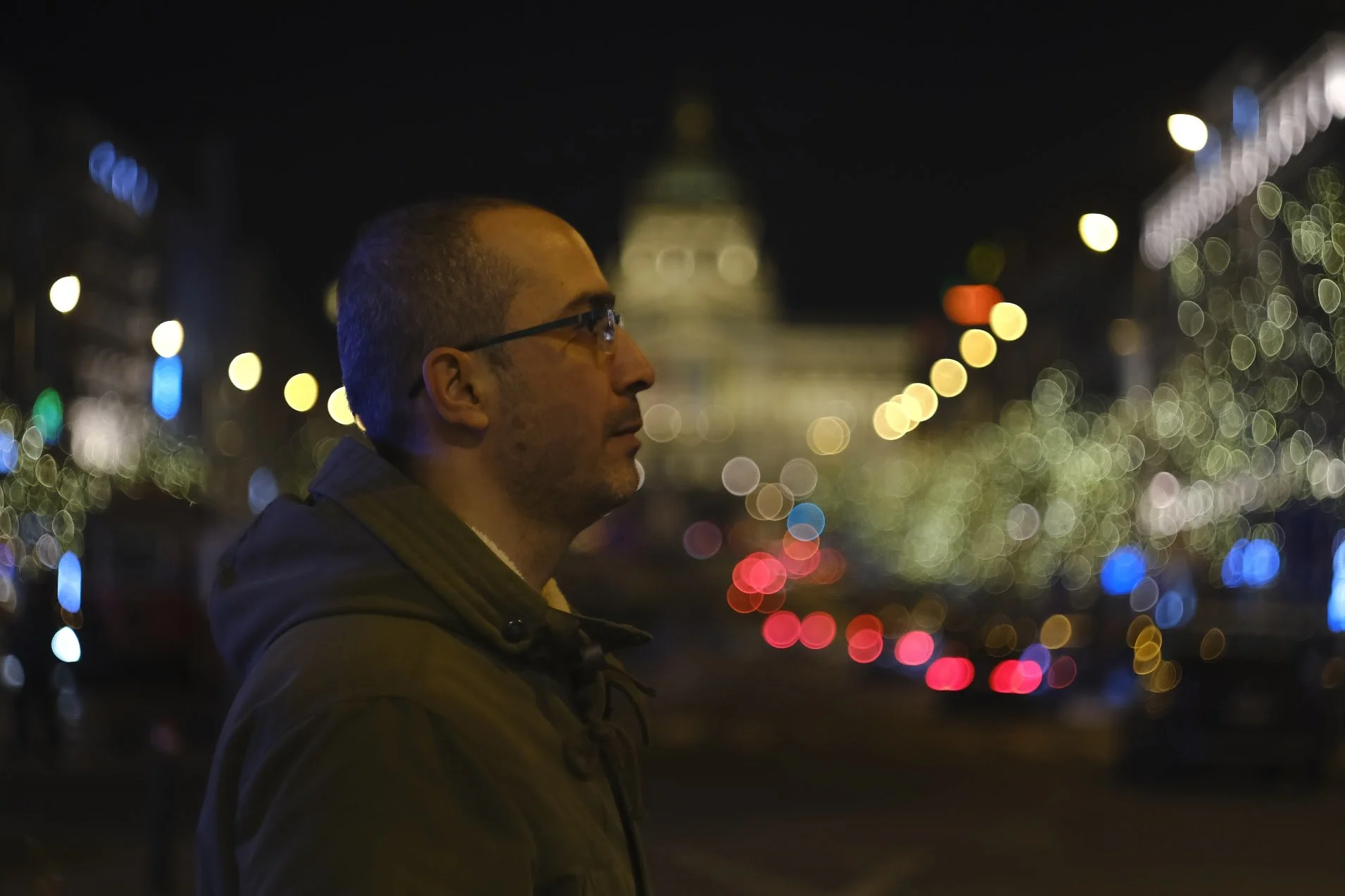
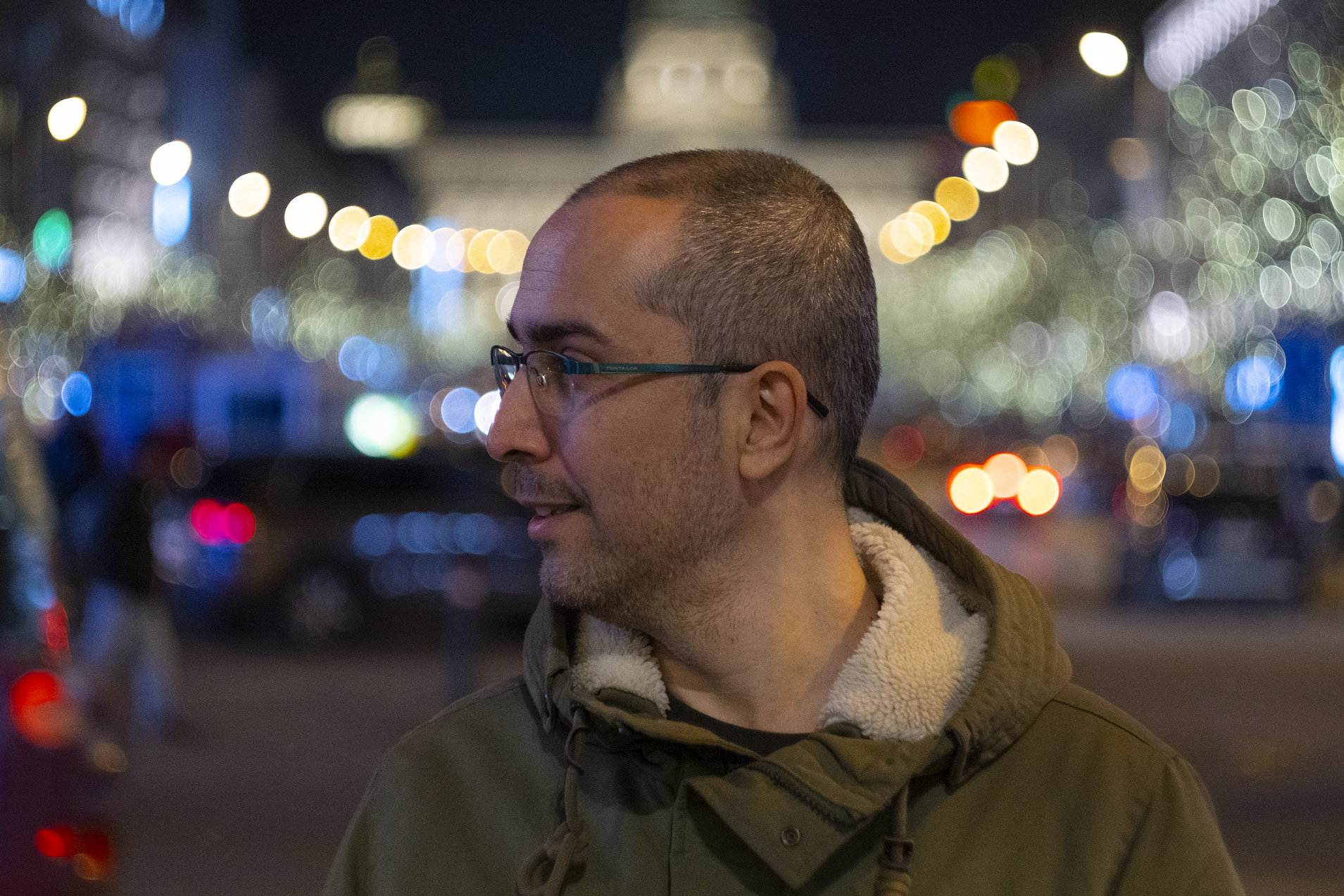
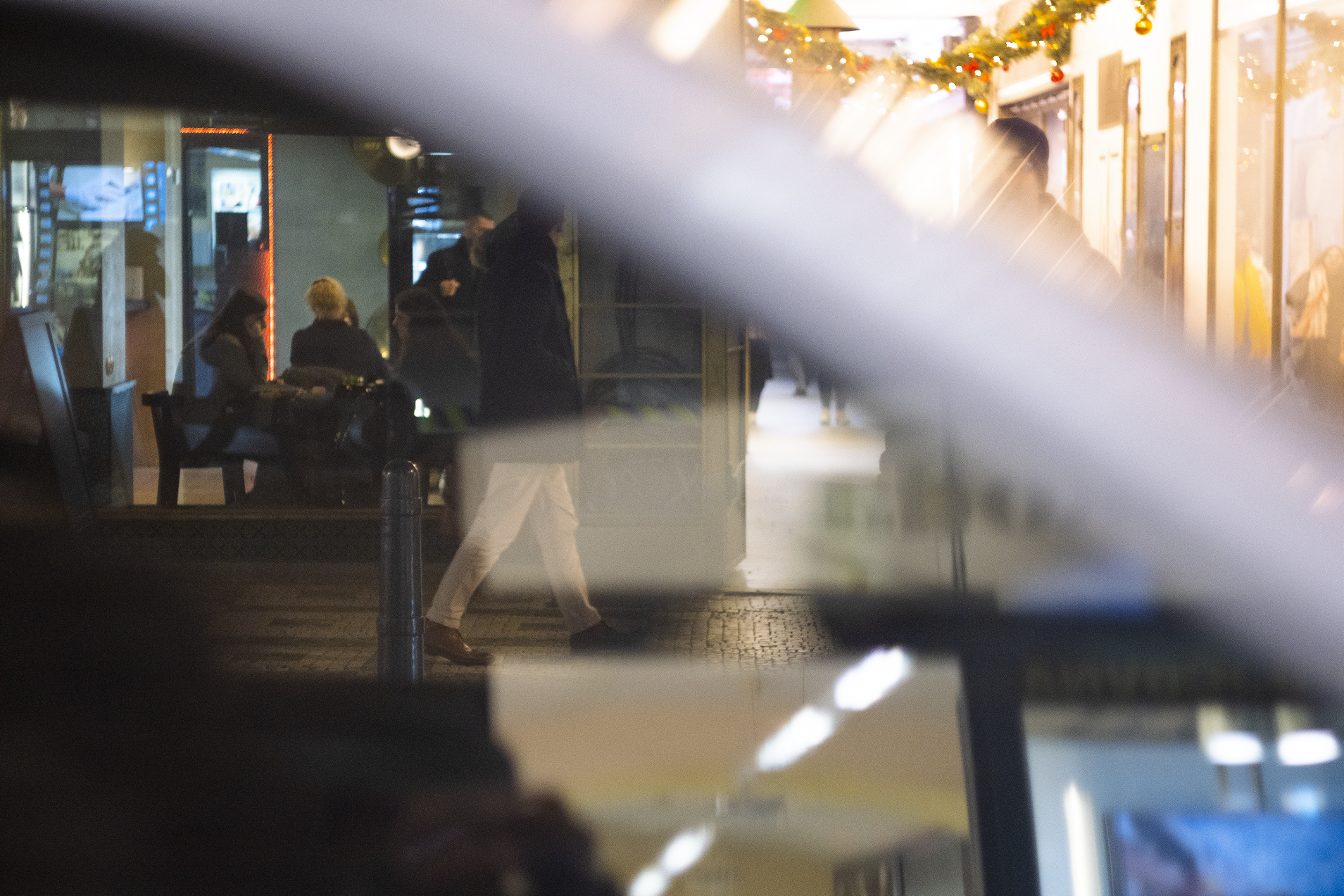
What you see in these shots:
The black-and-white portrait of Omid: my favourite, and the Helios at its absolute best. The lights behind his head turn into cat's-eyes and spin around the frame. Without colour, the swirl reads clearer than ever.
The profile portrait: the Christmas lights in the trees become bubbles with bright rims, like a curtain of light hanging behind the subject.
The smiling portrait: colours stay warm, and the coloured lights on both sides of the face melt softly away.
A few tips from using it on digital:
Focus is fully manual; magnification or focus peaking on your camera helps a lot.
In winter, wear thin gloves; with a stiff ring and frozen fingers, precise focus is nearly impossible.
At f/2 the image is soft and low in contrast; for portraits, that's part of the mood.
It flares easily against direct light, so a lens hood is worth having.
If you want to buy one
The Helios-44-2 is one of the most mass-produced lenses ever, and an original Soviet copy is still cheap to find. But not all copies are equal.
How to spot an original: the name in Cyrillic (ГЕЛИОС-44-2), a factory logo and a serial number. On most Soviet lenses the first two digits of the serial give the year.
Factory: Valdai copies are known for lower build quality (Wikipedia).
Physical check: look for oil on the aperture blades, fungus or haze between the elements, and the condition of the focus ring.
Adapter: for mirrorless cameras a simple M42 adapter does the job (I use M42-to-FX on my Fuji). Just make sure it reaches infinity focus.
Final word
The Helios-44-2 won't be the sharpest lens in your bag, but it might be the coolest. A lens that travelled from East Germany to the Soviet Union, was made in huge numbers, and now has a second life on digital cameras. If you shoot city streets at night, give it a go. Just don't forget your gloves in winter!
Farsi / Persian version -نسخه فارسی
〰️
Farsi / Persian version -نسخه فارسی 〰️
یه لنز قدیمی که نور رو میچرخونه
چند سال پیش، توی یه روز خیلی سرد زمستونی، رفتم سراغ یه مغازهٔ خیلی خاص توی پراگ. جایی که فقط دوربین و وسایل رترو میفروشه.
این همون مغازه ای هست که رفته بودم.
دنبال لنزی بودم که اول توی اینترنت دیده بودم و حسابی از بوکهٔ عجیبش خوشم اومده بود: هلیوس ۴۴-۲. وقتی فهمیدم همچین لنز خاصی همینجا توی پراگ هست، کلی ذوق کردم.
فقط حواسم بود که نسخهٔ کپی ژاپنی نباشه؛ همونی که رینگ فوکوسش نرمه. من خودِ اوریجینالِ شوروی رو میخواستم.
هلیوس ۴۴-۲ یه لنز ۵۸ میلیمتری با دیافراگم ۲ هست که توی شوروی برای دوربینهای زنیت ساخته شد. نیم قرن گذشته و هنوزم یکی از محبوبترین لنزهای قدیمی دنیاست.
رازش تیزی نیست، شخصیتشه. پسزمینهٔ محو اینجا آروم نمیشینه؛ مثل یه گرداب از نور دور سوژه میچرخه.
از بیوتار آلمانی تا هلیوس شوروی
هلیوس ۴۴ در اصل کپی شورویِ لنز بیوتار ۵۸ میلیمتری کارل زایسه. بیوتار اول یه لنز سینمایی بود و زایسِ ینا تا حدود ۱۹۶۰ نسخهٔ ۵۸ میلیمتریش رو برای کنتاکس و پراکتیکا میساخت (davidde.com).
بعد از جنگ جهانی دوم، فرمول بیوتار رسید به کارخونهٔ کراسنوگورسک (KMZ)؛ همون کارخونهای که زنیت میساخت. بامزه اینکه نسخههای اول حتی اسم بیوتار رو هم یدک میکشیدن: «بیوتارِ کراسنوگورسکی
راز بوکهٔ چرخشی
جالبه که این بوکهٔ چرخشی در اصل یه نقص اپتیکیه که شده امضای این لنز. همهٔ لنزهایی که از فرمول بیوتار اومدن این پسزمینهٔ چرخان رو دارن (Wikipedia).
مقصر اصلی وینیت مکانیکیه. دایرههای نور لبهٔ کادر بریده میشن و شکل چشم گربه میگیرن. این بیضیها دور وسط قاب ردیف میشن و حس چرخش میدن (OpticalLimits).
اگه چرخش حداکثری میخوای:
روی f/2 یا نزدیکش عکس بگیر؛ از f/5.6 به بعد اثرش کم میشه.
سوژه نزدیک باشه، پسزمینه یه کم دورتر.
پسزمینهای پر از نقطههای نور یا برگ درخت پیدا کن؛ حبابها کنتراست بالا میخوان.
سوژه رو وسط قاب بذار تا گرداب دورش بچرخه.
خلاصه اینکه چراغهای شهر توی شب، زمین بازیِ این لنزه.
یه شب یخزده توی میدان واتسلاو
لنز رو با آداپتور M42 به FX بستم روی دوربین دیجیتال فوجی و با امید زدیم بیرون. هوا زیر صفر بود و همین شد اولین چالش.
رینگ فوکوس این مدل خیلی سفت میشه، مخصوصاً توی سرمای زیر صفر. حالا یخزدگی دستها رو هم بهش اضافه کنید؛ دیگه حتی رینگ فوکوس رو زیر انگشتام حس نمیکردم.
خلاصه سریع چند تا عکس گرفتیم و برگشتیم خونه. ولی وقتی عکسها رو دیدم، مطمئن شدم ارزشش رو داشت. تا حالا هیچ لنزی نداشتم که همچین بوکهٔ خاصی بسازه.
توی این عکسها چی میبینید:
پرترهٔ سیاهوسفید امید: این یکی رو از همه بیشتر دوست دارم؛ اینجا هلیوس در اوج درخششه. چراغهای پشت سرش شدن چشم گربه و دارن دور قاب میچرخن. بدون رنگ، چرخش از همیشه واضحتره.
پرترهٔ نیمرخ: چراغهای کریسمسی درختها شدن حبابهایی با لبهٔ روشن؛ انگار یه پرده از نور پشت سوژه آویزونه.
پرترهٔ خندان: رنگها گرم موندن و نورهای رنگی دو طرف صورت نرم محو شدن.
چند تا نکته از کار باهاش روی دیجیتال:
فوکوس کاملاً دستیه؛ بزرگنمایی یا فوکوسپیکینگ دوربین خیلی کمک میکنه.
توی سرما دستکش انگشتی بپوشید؛ با رینگ سفت و دست یخزده، فوکوس دقیق تقریباً غیرممکنه.
توی f/2 تصویر نرم و کمکنتراسته؛ برای پرتره این خودش بخشی از حسِ عکسه.
جلوی نور مستقیم راحت فلر میخوره؛ هود لنز بیفایده نیست.
اگه میخوای یکی بخری
هلیوس ۴۴-۲ یکی از پرتیراژترین لنزهای تاریخه و نسخهٔ اوریجینال شورویش هنوزم ارزون پیدا میشه. ولی همهٔ نمونهها مثل هم نیستن.
اوریجینال رو از کجا بشناسی: اسم لنز به خط سیریلیک (ГЕЛИОС-44-2)، نشان کارخونه و شمارهٔ سریال. روی بیشتر لنزهای شوروی، دو رقم اول سریال سال ساخته.
کارخونه: نمونههای والدای به کیفیت ساخت پایینتر معروفن (Wikipedia).
چک فیزیکی: روغن روی تیغههای دیافراگم، قارچ یا مه بین عدسیها و وضع رینگ فوکوس رو ببین.
آداپتور: برای دوربینهای بیآینه یه آداپتور سادهٔ M42 کافیه (من از M42 به FX برای فوجی استفاده کردم). فقط مطمئن شو فوکوس تا بینهایت میرسه.
حرف آخر
هلیوس ۴۴-۲ تیزترین لنز کیفت نمیشه، ولی احتمالاً باحالترینش میشه. یه لنز که از آلمان شرقی رفت شوروی، توی تیراژ عظیم ساخته شد و حالا روی دوربینهای دیجیتال یه زندگی دوباره پیدا کرده. اگه شبها توی شهر عکاسی میکنی، حتماً امتحانش کن. فقط توی زمستون، دستکش یادت نره!
